
Camera Gimbals for Drone & Handheld Devices
Application Depends on Mission Duration, Required Navigation Accuracy, and Available Payload Space.
Camera Gimbals for Drone & Handheld Devices
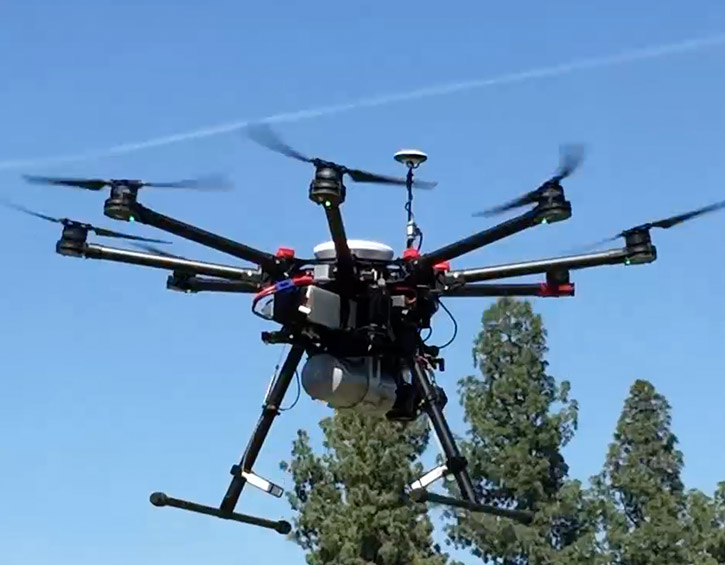 When we see incredible pictures of the moon and Earth from space, we don’t often understand, nor pay attention to, how these clear images come to us. Aside from the precision lens, gyros play a significant role in camera stabilization. Even when the vehicle is flying at high speeds or thousands of miles per hour in space, the camera inertial sensor must remain the camera still to get the right image.
Fiber-optic gyroscopes (FOGs) and quartz micro-electromechanical systems (QMEMS) gyroscopes are the two most widely used inertial sensors for guiding surveillance aircraft such as drones and other unmanned platforms. Each offers distinct trade-offs in economics, size, precision, and robustness, making them suitable for different mission profiles.
FOGs provide extremely high accuracy and low drift by measuring the phase shift in counter-propagating light within a fiber coil. Their stability makes them well-suited for long-duration flights, high-altitude unmanned aircraft, and missions requiring precise navigation when GPS is denied or degraded.
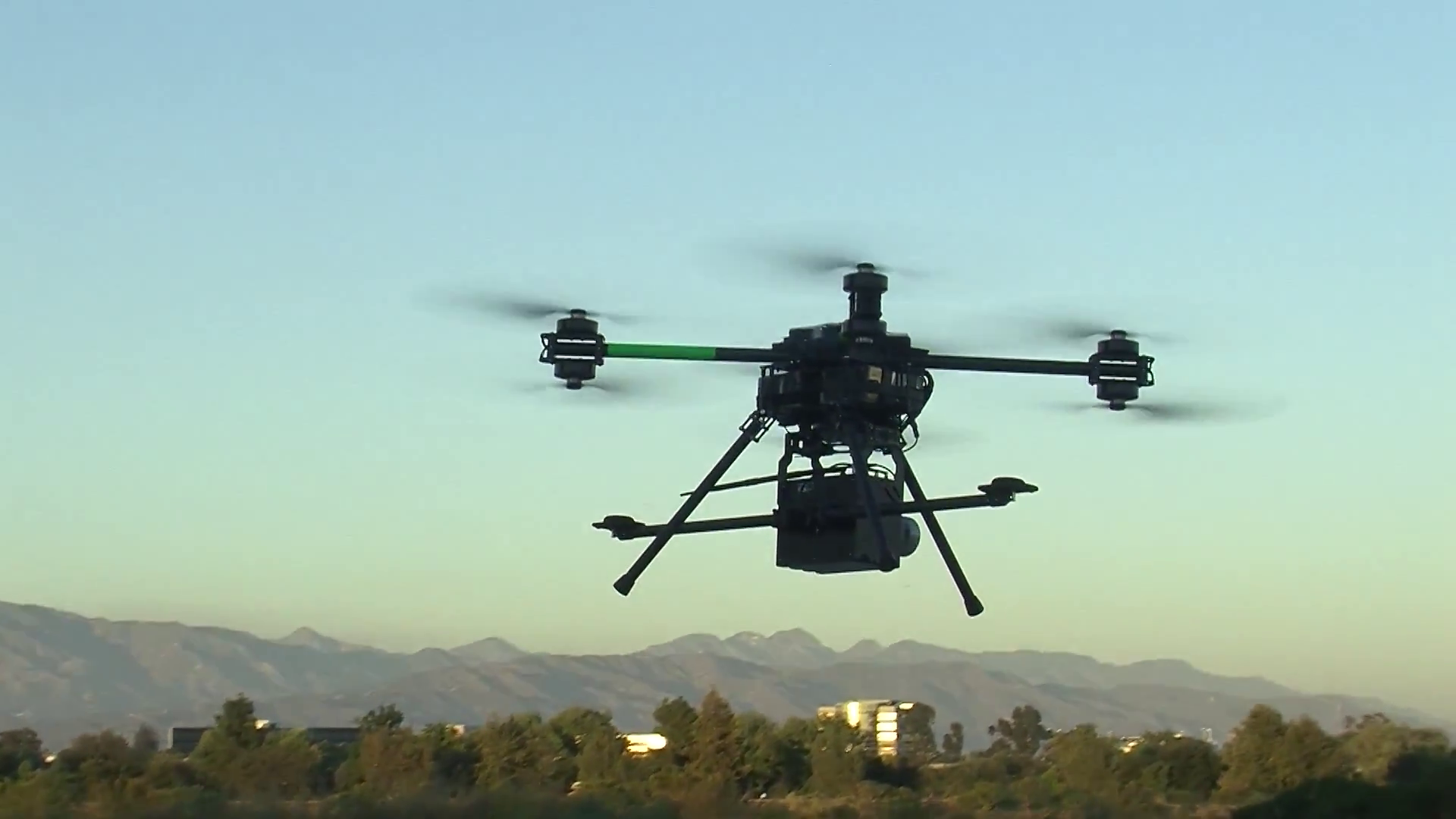 QMEMS gyroscopes use vibrating quartz structures to sense rotation and combine the mechanical benefits of quartz with MEMS manufacturing. They offer good accuracy for tactical-grade applications, though with higher drift and lower bias stability than FOGs. Their key advantages are cost, durability, and size: QMEMS sensors are significantly cheaper to produce at scale and often fit into very small chip-level or module-level packages, making them ideal for small UAVs, multirotors, and expendable drones. They also withstand high vibration and shock – important for small aircraft that experience dynamic flight conditions.
FOGs are best suited for medium- to large-scale surveillance aircraft, long-range drones, and systems requiring high-precision inertial navigation. QMEMS gyroscopes are the economical choice for small UAVs, swarm drones, consumer-grade unmanned aircraft, and platforms where low cost, small size, and ruggedness outweigh ultra-high precision. The optimal selection depends on mission duration, required navigation accuracy, available payload space, and budget constraints.
Many developers from NASA and other space and military organizations trust the engineers at EMCORE to help bring their stringent requirements to reality, and to bring those sharp, clear, dynamic photographs home. Contact EMCORE when you are ready to reach the next level.